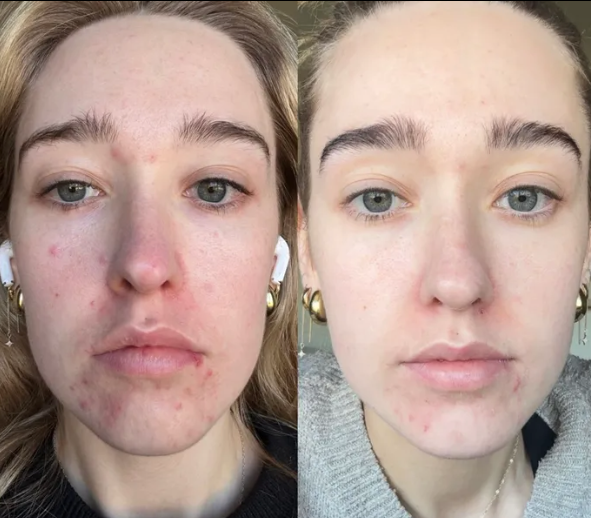
LED Red Light Therapy Mask Results | Before & After Images.
There's a reason red light therapy has gone from celebrity-facialist secret to one of the most-Googled beauty topics on the planet. It works. But between the filtered Instagram results and the influencer hype, it's hard to tell what's real and what's marketing.
So we're going to do something different. No retouching. . Just the science of LED Red Light Therapy, the four things that actually separate a serious LED device from an overpriced gimmick, and a gallery of real Bondi Body customers and our CEO and Founder Trish, three months in, no filter.
How red light actually works on your skin
Time for the science bit — promise we'll keep the white-coat language to a minimum. The proper name for what's happening is photobiomodulation, or PBM if you want to drop it casually at brunch. It's the same principle clinics have been using for decades, now small enough to live in your bathroom cupboard.
What's actually happening under the light (PBM)
Think of your skin cells the way you'd think of plants. Plants absorb sunlight and turn it into energy through photosynthesis. Your skin cells, it turns out, can do something surprisingly similar with red and near-infrared light. The wavelengths penetrate the skin, your cells soak them up, and a chain of useful biological reactions kicks off — completely naturally, no chemicals, no needles, nothing sitting on the surface.
Step one — waking up tired skin cells
Inside every cell sits a tiny power plant called the mitochondria. Its only job is producing ATP — the fuel that runs everything your cells do. As we age (and stack up sun exposure, late nights, stress), that energy production slows right down. Tired mitochondria mean tired skin. Red and near-infrared light wake those mitochondria back up. ATP production climbs, and suddenly your cells have the energy to do what they're designed to do: repair, regenerate, and behave a decade younger.
Step two — collagen and elastin come back online
Once those cells have energy again, your fibroblasts — the ones in charge of building collagen and elastin — get a serious second wind. Collagen is the structural scaffolding that keeps skin firm. Elastin is what gives it bounce, that "snap back" quality. Both fall off a cliff after your mid-twenties, which is why skin starts to look tired and lose its plumpness. PBM kicks fibroblast production back into gear. Over weeks of consistent use, you start to see the difference: smoother texture, fewer fine lines, that lit-from-within glow you can't fake with highlighter.
Four things to check before buying any LED mask
The LED market right now is a bit of a wild west. Every other beauty brand has slapped some red bulbs into a silicone shell and called it salon-grade. Most of them aren't. Here are the four specs that actually decide whether a device delivers results - or just sits there glowing prettily.
1. The wavelength — the make-or-break number
Wavelength, measured in nanometres (nm), decides how deep the light reaches and what it does once it gets there. Two wavelengths matter for skin, and a serious device needs both:
- Red light, around 630nm. Stays nearer the surface and handles tone, texture and overall radiance. This is the wavelength doing the visible "glow" work.
- Near-infrared, around 830nm. Goes deeper, all the way into the dermis where collagen and elastin actually live. Without this one, you don't have a real anti-ageing device - just a glow boost.
The Bondi Body LED Face, Neck & Chest Mask uses both, in the clinically-validated ratio.
2. The number of LEDs (and where they actually reach)
More LEDs means more light, distributed more evenly across the skin. A mask with 30 or 40 bulbs leaves gaps - patches of skin getting half the dose, or none at all. The Bondi Body LED Face, Neck & Chest Mask packs 234 medical-grade LEDs (114 on the face mask and 120 on the neck/chest mask), spread across the full face, neck and chest. That last bit matters: your décolletage shows age faster than your face does, and most masks ignore it entirely. A device that stops at the jawline is solving half the problem.
3. Power density — the spec brands love to hide
Power density - measured in mW/cm² - is how much actual light energy reaches your skin per session. It's the spec most brands quietly leave out of their marketing, because it's also the spec that decides whether anything happens at all. Too low and you're wasting your time. Too high and you're risking irritation or burns. A well-engineered at-home device sits in the clinically optimal middle: powerful enough to drive real cellular change, gentle enough to use solo at home without supervision.
4. The certifications that prove it's actually safe
Certifications aren't marketing badges - they're the result of independent labs putting a device through proper safety and performance testing. Three to look for: FDA clearance (US), the CE mark (Europe), and the UKCA mark (UK). The Bondi Body mask is FDA approved and made from medical-grade silicone, which is exactly the standard you should be holding any LED device to. If a brand can't show you any of these certifications, walk away. Light therapy is safe - but only when the device has actually been tested.y tested and are safe for there intended use.
How to get the most out of every session
Buying a beautiful piece of beauty tech and using it twice is one of the most common skincare mistakes there is. Consistency is what actually delivers results - and a few small habits around your sessions will take what's already happening up another gear.
Prep your skin first
Clean skin, no products. The light needs a clear path to reach your cells, and anything sitting on the surface - SPF, rich creams, oils, makeup - acts like a barrier. A quick cleanse, a pat dry, and you're set.
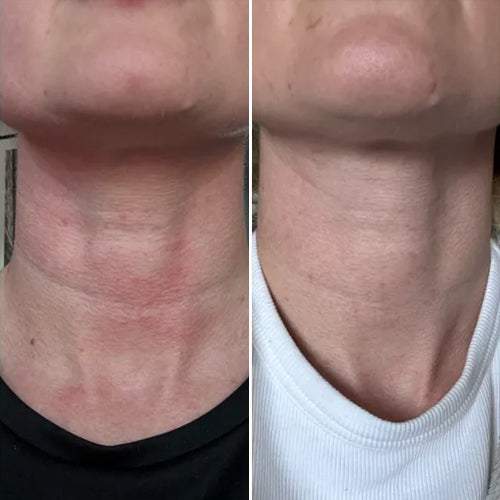
Kate used our LED Face Neck and Chest Mask.
I am so happy I started with Red Light Therapy. The Bondi Body LED Face Neck and Chest mask is comfortable, easy to use, my neck skin is firmer and my complexion is even. Kate B
The bottom line
Red light therapy is one of the few "miracle" beauty technologies that's actually backed by decades of clinical research. Used consistently, it produces visible, measurable improvements in tone, texture, fine lines and firmness — without needles, downtime, or harsh actives. The catch is the device. Get the wavelengths wrong, the LED count too low, the certifications missing, and you're sitting under an expensive night light. Get them right, and you're delivering what your skin would otherwise pay a clinic £200 a session for, from your own sofa. The Bondi Body LED Face, Neck & Chest Mask was built to be that device. Real science. Real results. Skin that looks like you.
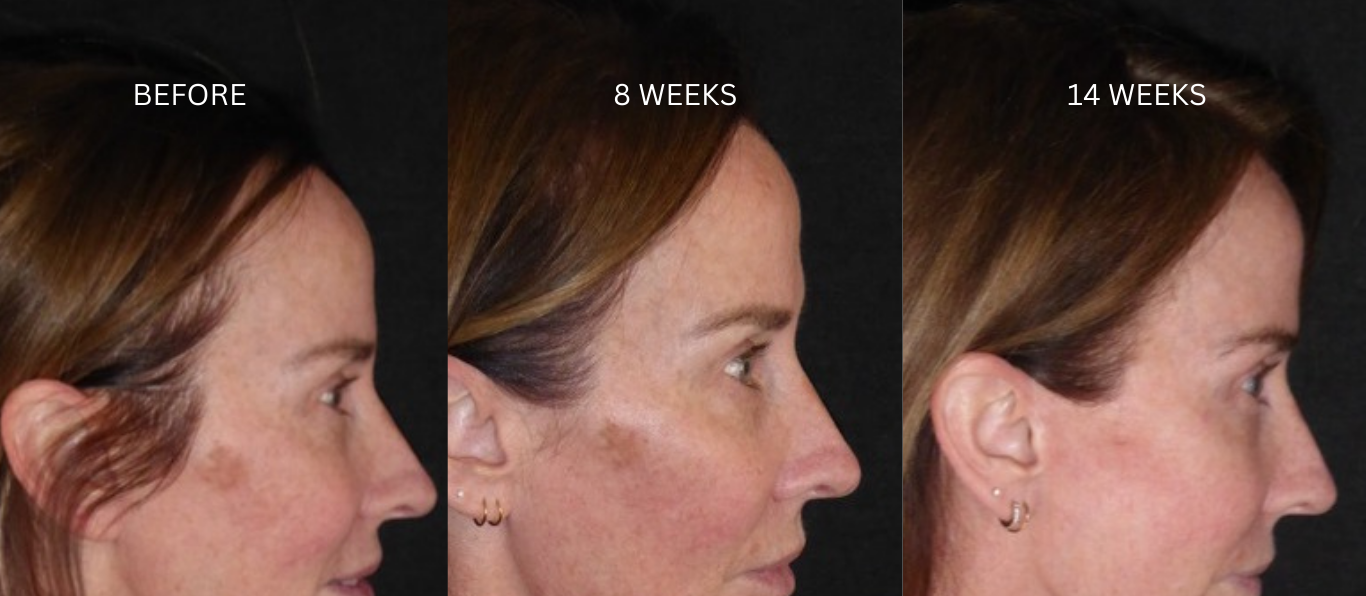
Meet Trish our Founder/CEO
Trish used the LED Face Neck and Chest Mask twice a week for 12 weeks, to treat her sun damaged skin and her pigmentation spot.
Frequently Asked Questions (FAQ)
How long does it take to see improvements from red light therapy?
Most people start spotting changes in tone and texture between weeks four and eight that "did I get a facial?" glow that you can't quite pin down. The deeper shifts - softer fine lines, firmer feel, the kind of change you'd point to in a photo - typically land somewhere between weeks twelve and sixteen. Light therapy rewards patience: your cells are working away under the surface long before the mirror starts showing it.
Is red light therapy better than Botox or fillers?
Different tools, different jobs. Botox relaxes muscle, fillers add volume - both deliver a same-day result you can see in the mirror immediately. Red light therapy works much deeper and more slowly, improving the underlying quality of your skin: tone, texture, firmness, and how well it heals itself. Plenty of people use both, and many practitioners actively recommend light therapy alongside injectables to make the results last longer. It's not "either/or" - it's a long-term skin health investment that plays nicely with everything else.
Does red light therapy hurt? What does it feel like?
Not even slightly. Most people describe it as a gentle, slightly warm feeling - closer to a sunbeam through a window than anything resembling a "treatment". There's no flushing, no peeling, no recovery. You can mask up while you scroll your phone or answer emails, and walk straight back into your day the moment the timer goes off..
Who should not use red light therapy? (contraindications)
Most people are absolutely fine. The exceptions: if you're pregnant, have a history of epilepsy, or take medication that causes photosensitivity (some acne treatments, certain antibiotics, and a handful of antidepressants), have a quick chat with your GP before starting. The same applies if you're managing any active skin condition. When in doubt - ask. Better five minutes on the phone than a guess.
Is 10 minutes of red light therapy a day enough?
Yes - 10 minutes is plenty, and you don't need to do it every day; more isn't better. Sessions of up to 15 minutes, 3–4 times a week, are the sweet spot for most at-home LED devices, ours included. Your cells can only absorb so much light per session; longer or more frequent treatments don't speed up your results, they just risk irritation. Consistency over intensity, every single time.