



BONDI BODY
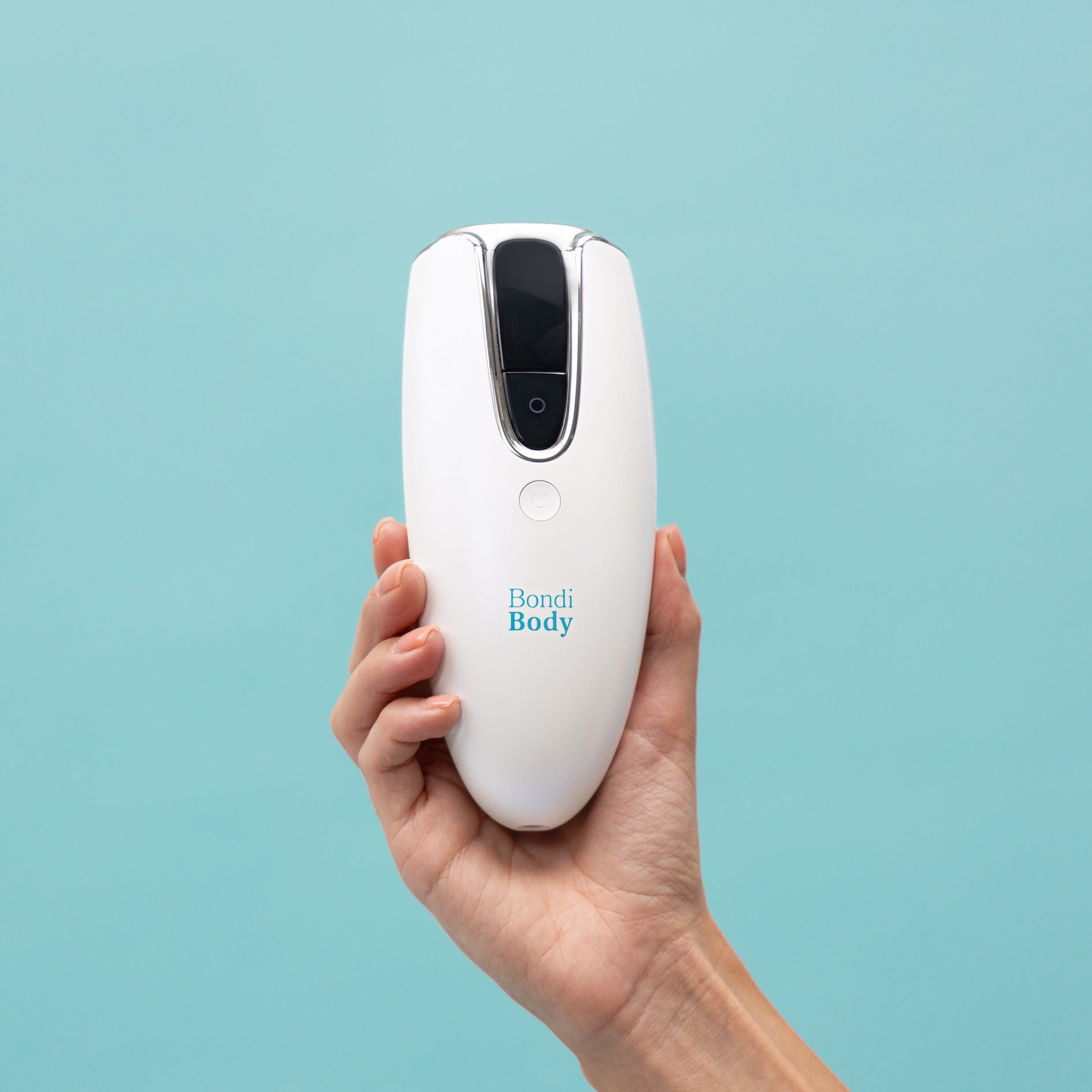
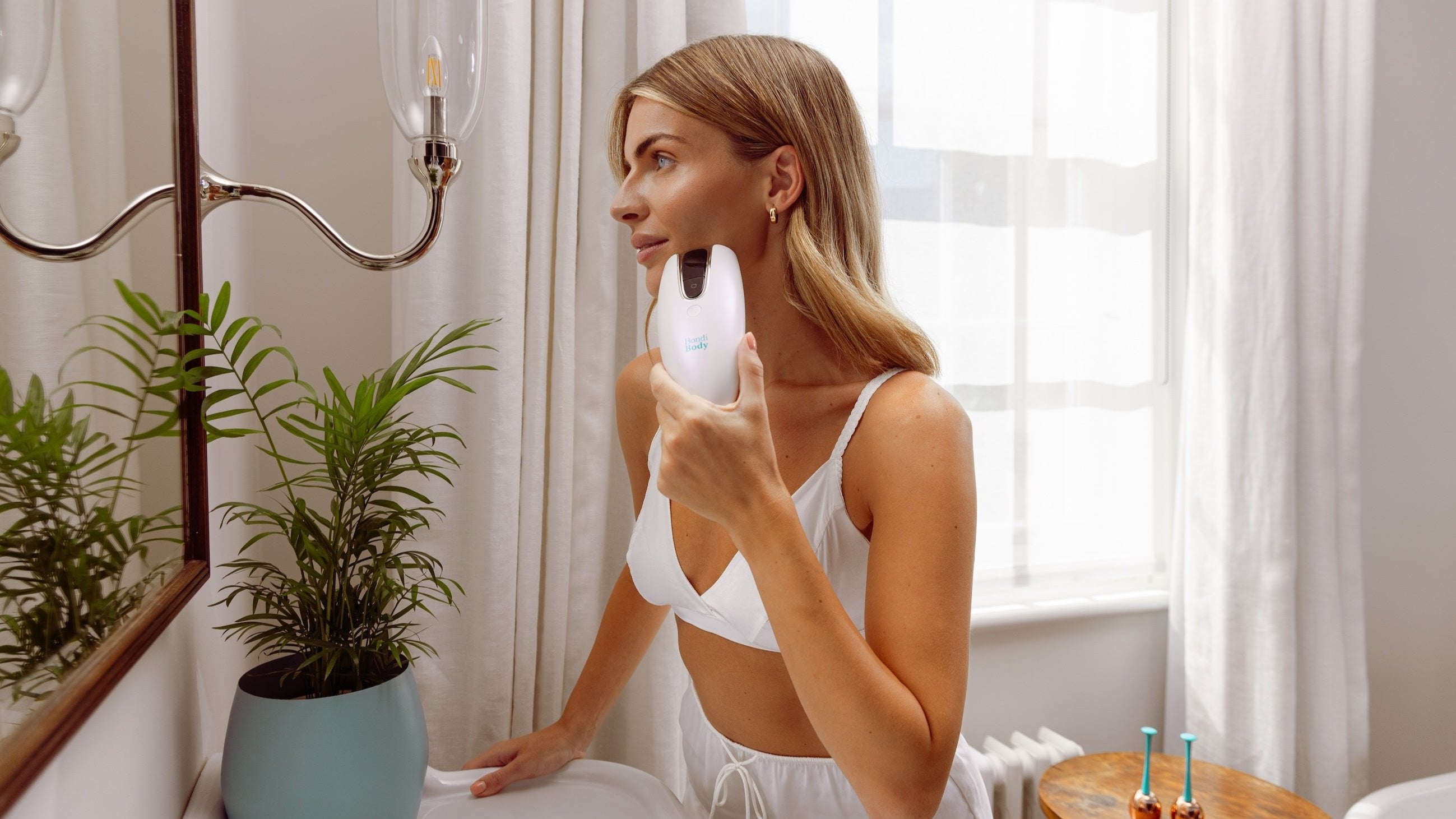
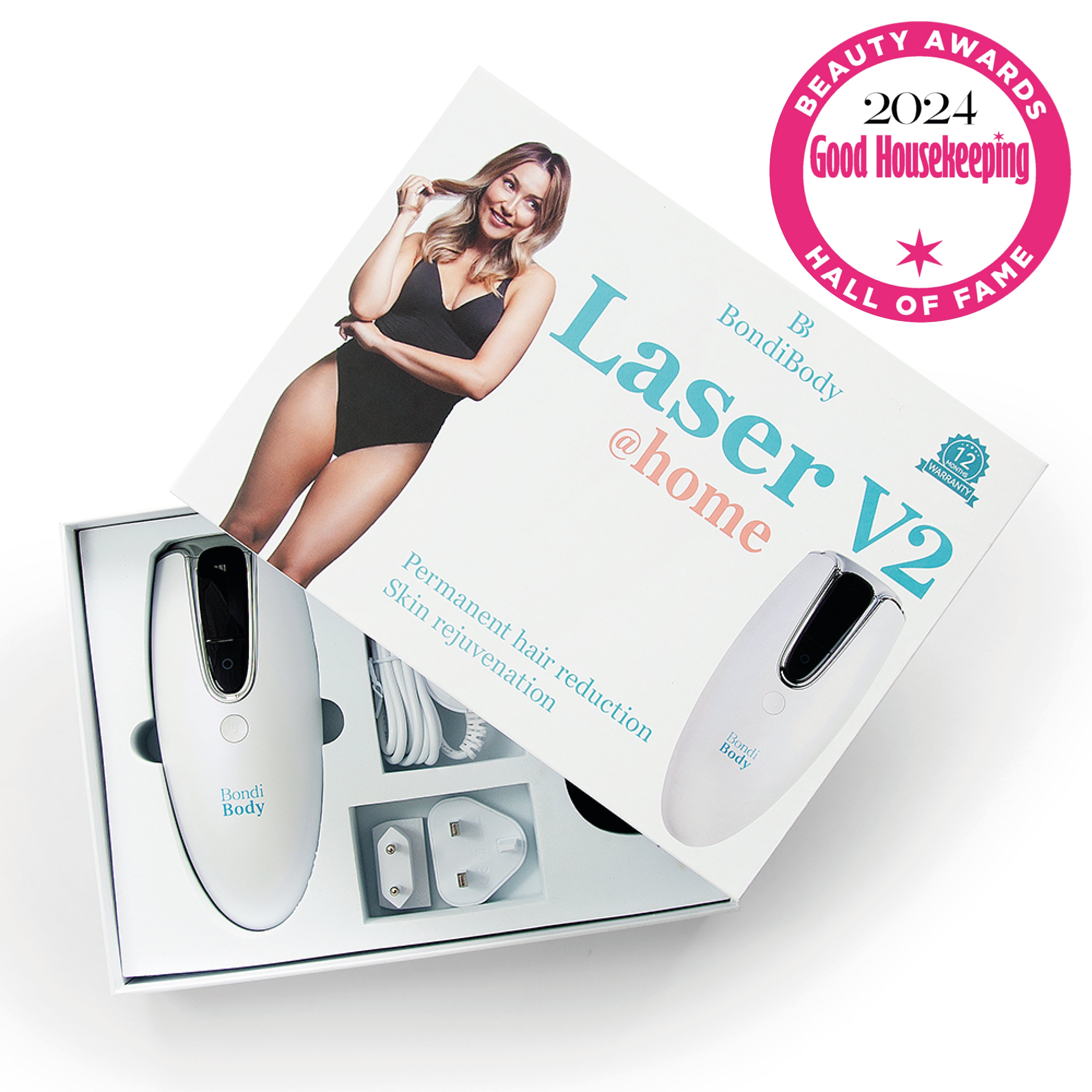
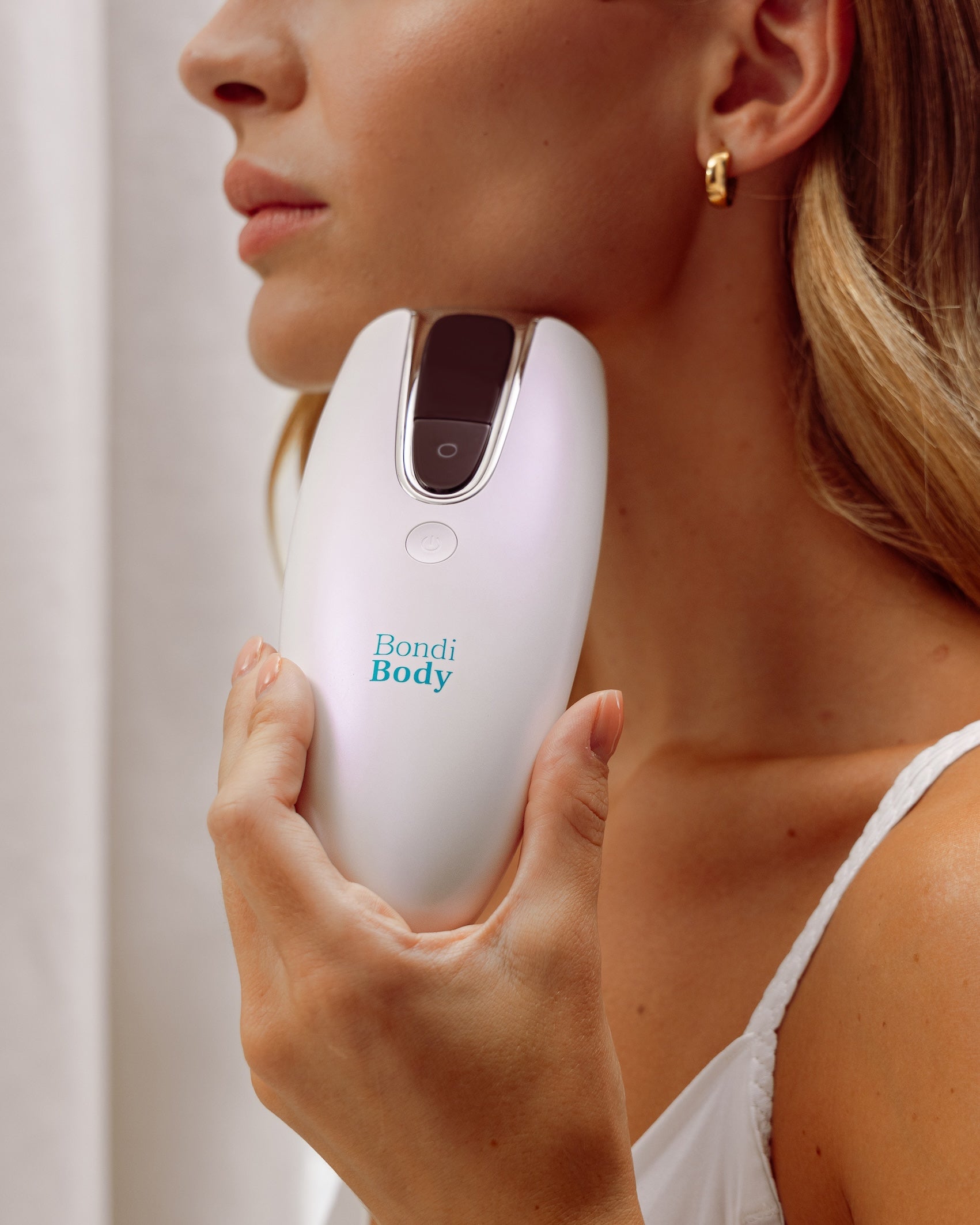
Bondi Body V2 IPL Laser | Age-Defying Skin Rejuvenation at Home
Award-winning · As featured in Good Housekeeping, the Mirror & the Daily Mail
One device, two results: fades sun spots, evens skin tone and reduces surface-level broken capillaries and gives salon-grade hair reduction at home.
or 4 interest-free payments of £52.25 with Clearpay
Free UK delivery · 50-day money-back guarantee
Pay securely with
Trusted by top UK media.
Bondi Body has been tested and recommended by leading UK beauty editors.
 “Virtually painless.”
V2 · No. 1 in Best IPLs
“Virtually painless.”
V2 · No. 1 in Best IPLs “In all honesty, this IPL device is up there with the best of them.”
V2 · Best for comfortable use
“In all honesty, this IPL device is up there with the best of them.”
V2 · Best for comfortable use “Simple but effective.”
V2 · Best IPL device for large areas
“Simple but effective.”
V2 · Best IPL device for large areas Named Best for sensitive skin in the guide to the best at-home hair removal gadgets.
V2 · Best for sensitive skinThe Times
Named Best IPL hair removal device for beginners in the tried-and-tested round-up.
V2 · Best for beginners · 8/10The Telegraph
“It’s an extraordinary and rather space-age thing.”
IPL Laser review
Named Best for sensitive skin in the guide to the best at-home hair removal gadgets.
V2 · Best for sensitive skinThe Times
Named Best IPL hair removal device for beginners in the tried-and-tested round-up.
V2 · Best for beginners · 8/10The Telegraph
“It’s an extraordinary and rather space-age thing.”
IPL Laser review “A genuine step forward from older IPL technology.”
V2 review · July 2026The Scotsman
“This IPL device has changed my life.”
V2 · Shopping feature
“A genuine step forward from older IPL technology.”
V2 review · July 2026The Scotsman
“This IPL device has changed my life.”
V2 · Shopping feature Founder Trish Coulton shares her expert tips for buttery soft, prickle-free skin.
The expert’s guide to at-home hair removalLuxury London
Tried and reviewed by the Fighting Fifty beauty team.
Bondi Laser @ Home reviewFighting Fifty
Named Best LED face mask for acne in the guide to the best LED masks.
LED Face Mask · Best for acne
Founder Trish Coulton shares her expert tips for buttery soft, prickle-free skin.
The expert’s guide to at-home hair removalLuxury London
Tried and reviewed by the Fighting Fifty beauty team.
Bondi Laser @ Home reviewFighting Fifty
Named Best LED face mask for acne in the guide to the best LED masks.
LED Face Mask · Best for acne “This top-selling device brings salon-quality treatments to the comfort of your home.”
LED Face Mask · Beauty shopping guideKensington & Chelsea Review
“A revolutionary device that redefines the boundaries of at-home skincare.”
LED Face Mask reviewPIBE Magazine
“The Bondi Body LED Face Mask stands out as the sole LED mask in its price range.”
LED Face Mask featureMen’s Fashion Magazine
“It’s not just a dermaplaner, it’s three powerful skincare treatments built into one compact tool.”
Dermaplane · We love it!Crave Magazine
“It really is that good.”
Dermaplane featureWelsh Country
“This top-selling device brings salon-quality treatments to the comfort of your home.”
LED Face Mask · Beauty shopping guideKensington & Chelsea Review
“A revolutionary device that redefines the boundaries of at-home skincare.”
LED Face Mask reviewPIBE Magazine
“The Bondi Body LED Face Mask stands out as the sole LED mask in its price range.”
LED Face Mask featureMen’s Fashion Magazine
“It’s not just a dermaplaner, it’s three powerful skincare treatments built into one compact tool.”
Dermaplane · We love it!Crave Magazine
“It really is that good.”
Dermaplane featureWelsh Country
Couldn't load pickup availability
✓ Free UK delivery in 2–3 working days
✓ Pay in 4 interest-free instalments with Clearpay
✓ 50-day money-back guarantee & 12-month warranty
Bondi Body V2 IPL Laser | Age-Defying Skin Rejuvenation at Home
• 8 adjustable intensity settings for a personalised treatment experience
• Manual & automatic modes for flexible, easy use
• 7.81–15.31 J/cm² energy output for effective skin rejuvenation
• Helps improve the appearance of uneven skin tone, including sun-damaged skin
• Supports a more balanced-looking complexion and evens out skin tone
• Helps reduce the appearance of pigmentation and surface-level broken capillaries
• Improves overall skin texture and clarity
• Non-invasive treatment with no downtime
• Salon-quality technology at home
• Includes a 12-month warranty

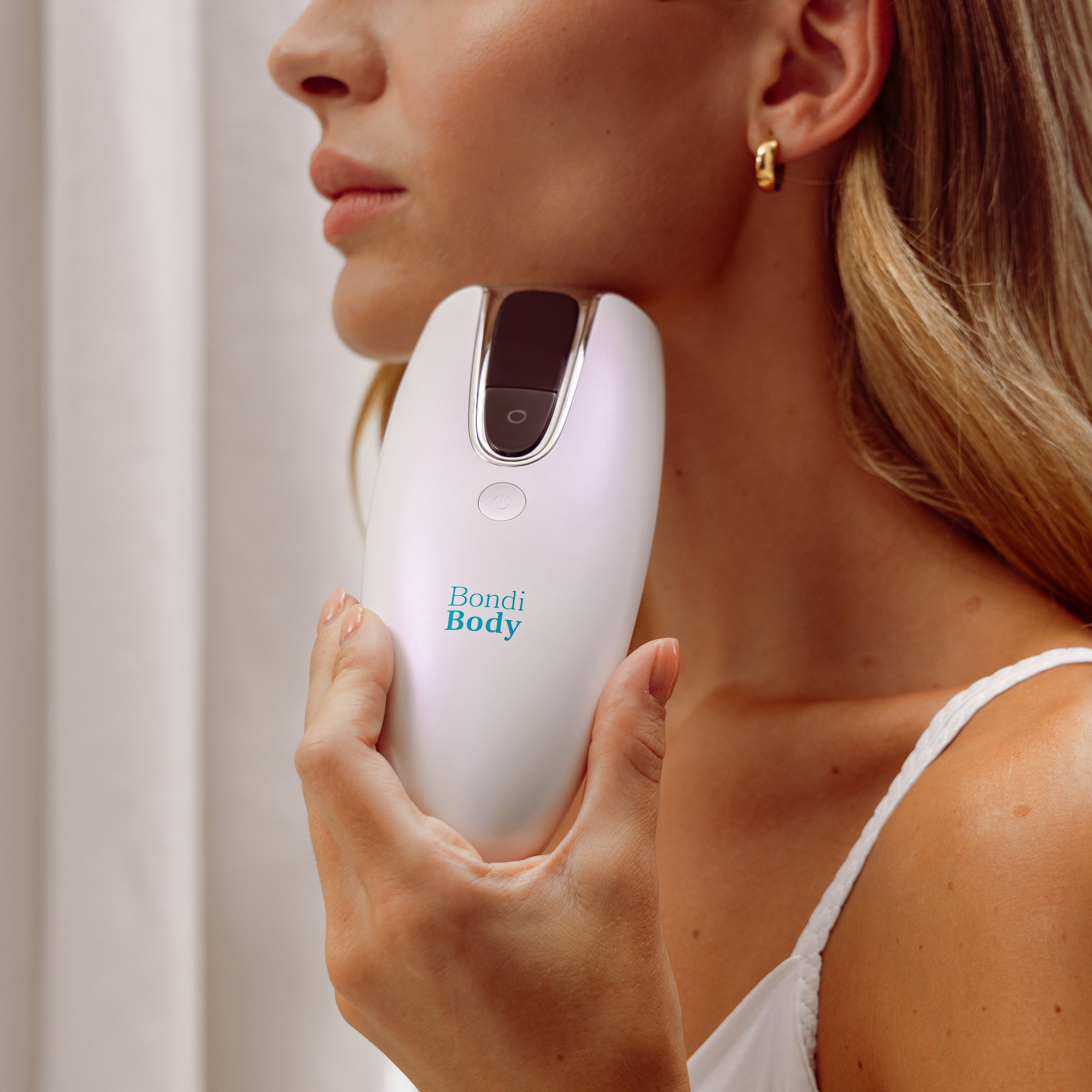
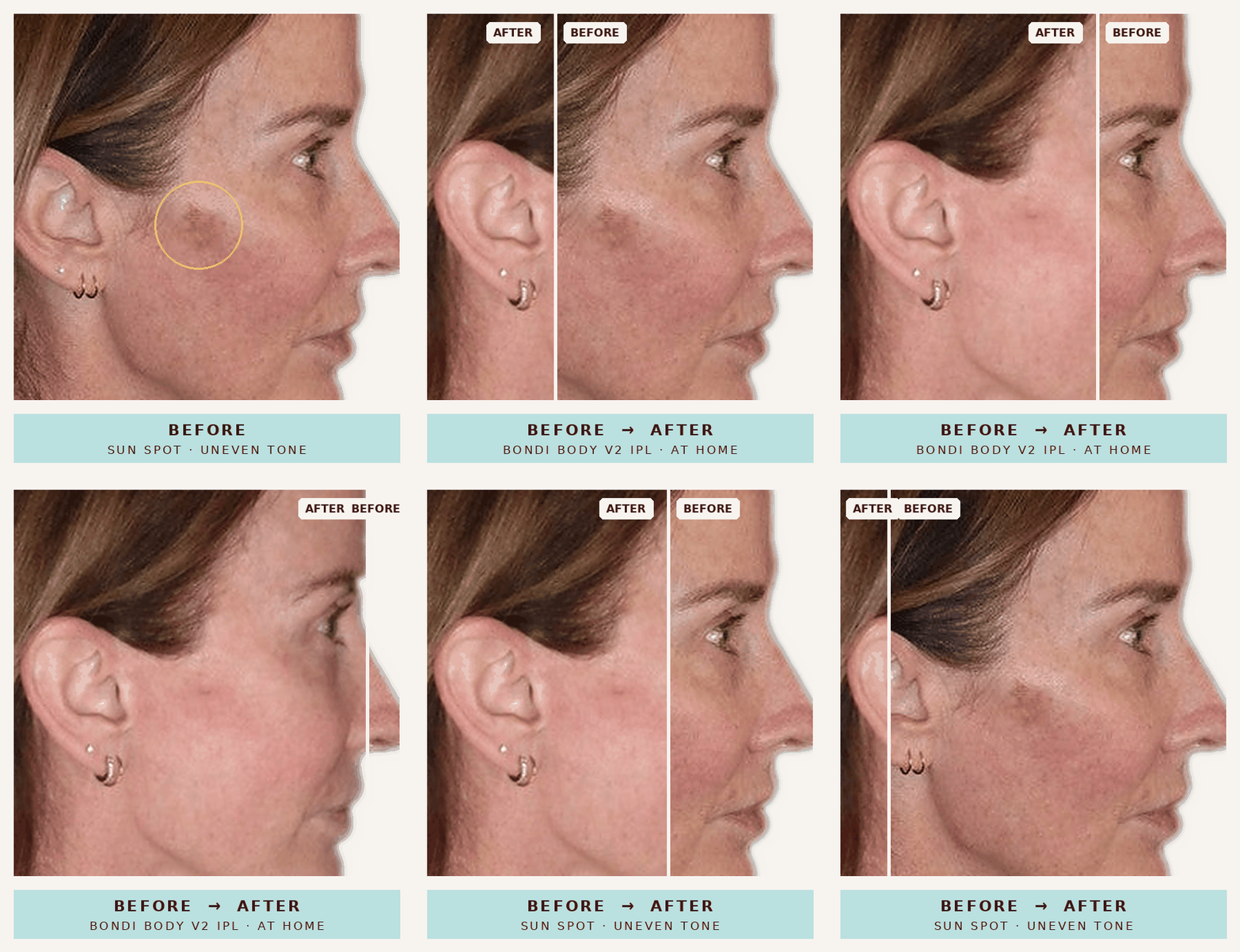
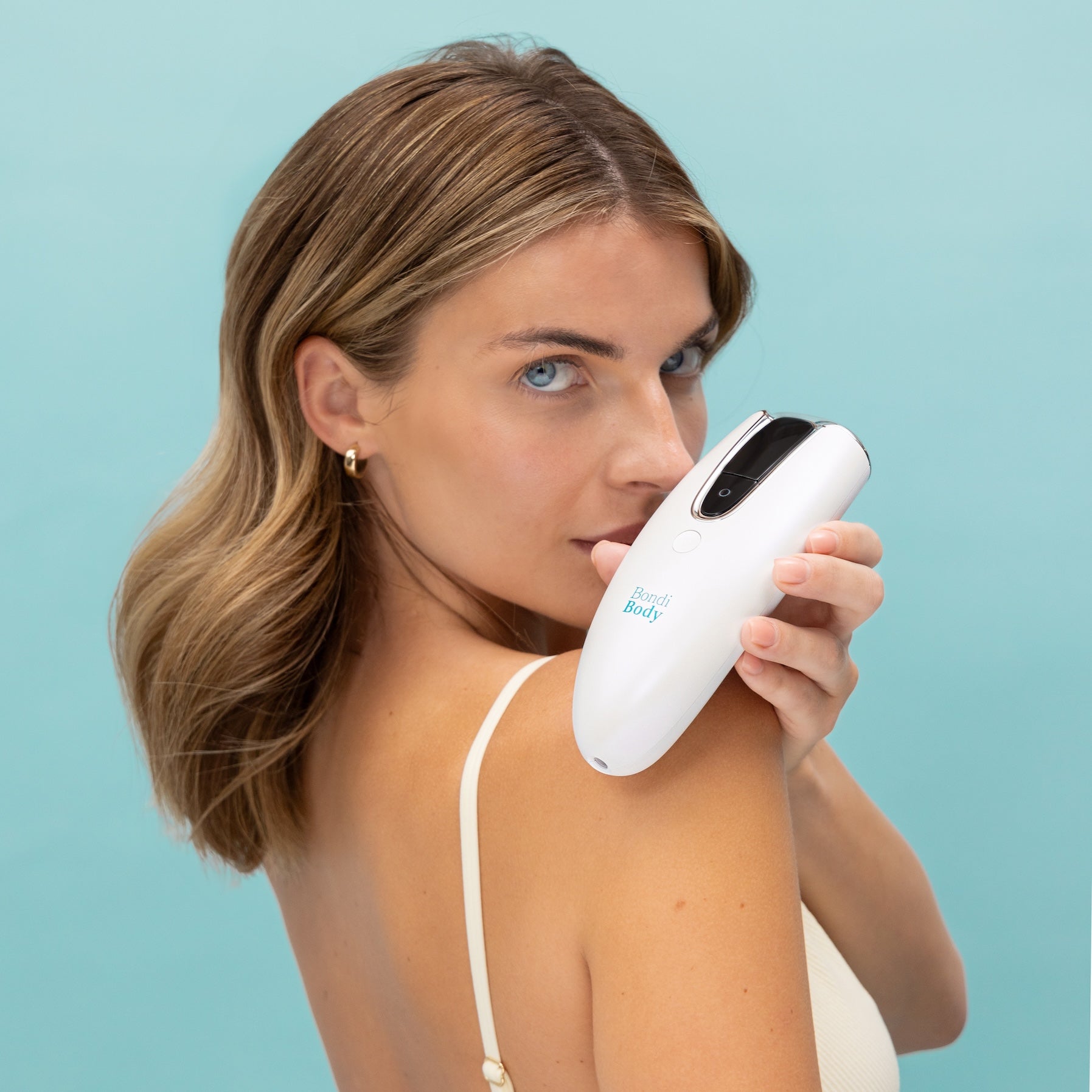

How does IPL work for skin?
IPL sends gentle flashes of light into the skin. The light is absorbed by the extra pigment in sun spots and brown marks, turns into heat and breaks it up. With regular use, marks fade and skin tone looks more even.
-

01
Light finds the pigment
Each flash passes through the surface of the skin and is drawn to the extra pigment in sun spots and brown marks.
-
 BEFORE
02
Gentle heat breaks it up
The light turns into gentle heat in the pigment and breaks it up. Over the following weeks your skin clears it away, so the marks gradually fade.
-
 AFTER
AFTER03
More even, brighter skin
Use once a week for 12 weeks, starting on setting 1, then top up as needed. Protect your skin with SPF 30+ every day so new marks don't form.
What the research shows
Published studies of IPL for sun spots and sun-damaged skin.
- 74.6–90%success rate for IPL on sun spots, across a review of 41 clinical trials and 3,234 patients.Mardani et al. (2025), Journal of Cosmetic Dermatology. Systematic review.
- 90%+of people saw visible improvement in uneven pigmentation, pores and thread veins after a course of IPL.Bitter (2000), Dermatologic Surgery. 49 adults.
- 88%of people in the same study were satisfied with their results.Bitter (2000), Dermatologic Surgery.
These studies used professional, in-clinic IPL, not the Bondi Body V2. At-home IPL uses lower energy, so results build more gradually and vary from person to person.
The science behind IPL for skin
- DermNet: Intense pulsed light therapy: how IPL treats freckles, age marks and sun damage.
- StatPearls (NIH National Library of Medicine): Intense Pulsed Light (IPL) Therapy: a medical reference on IPL for sun spots (lentigines) and sun-damaged skin.
- Sales et al. (2022), Intense Pulsed Light on skin rejuvenation: a systematic review, Archives of Dermatological Research.
- Treatment of solar lentigines (sun spots): a systematic review of clinical trials (2025), Journal of Cosmetic Dermatology.
- Babilas et al. (2010), Intense pulsed light (IPL): a review, Lasers in Surgery and Medicine.
These studies look at IPL treatment in general, mostly in clinics. At-home IPL uses lower energy, so results build up gradually and vary from person to person.
Skin tones
- FairType I
- LightType II
- MediumType III
- OliveType IV
- BrownType V
- DeepType VI
Is IPL right for your skin?
IPL works by targeting pigment, so it works best on lighter skin with darker marks.
Suitable for fair to olive skin (types I to IV). Not suitable for brown or deep skin (types V and VI), because darker skin absorbs more of the light and could burn or become darker.
Don't use it on moles, tattoos, broken or sunburnt skin, or if you're pregnant. If you're not sure, ask your GP or dermatologist.
Not sure where you fit? Message me and I'll tell you honestly. Trish x
Ask Trish on WhatsAppKey facts
- What it is: At-home IPL (Intense Pulsed Light) device for skin rejuvenation and hair reduction
- Intensity levels: 8, with manual and automatic modes
- Energy: 7.81–15.31 J/cm²
- Power: Mains powered – it needs to be plugged in to operate
- How often: Once a week for 12 weeks, then as needed. Start on setting 1
- Who it suits: Works best on light to medium skin tones with darker hair. Not suitable for very dark skin tones (Fitzpatrick V–VI) or for light blonde, grey or red hair.
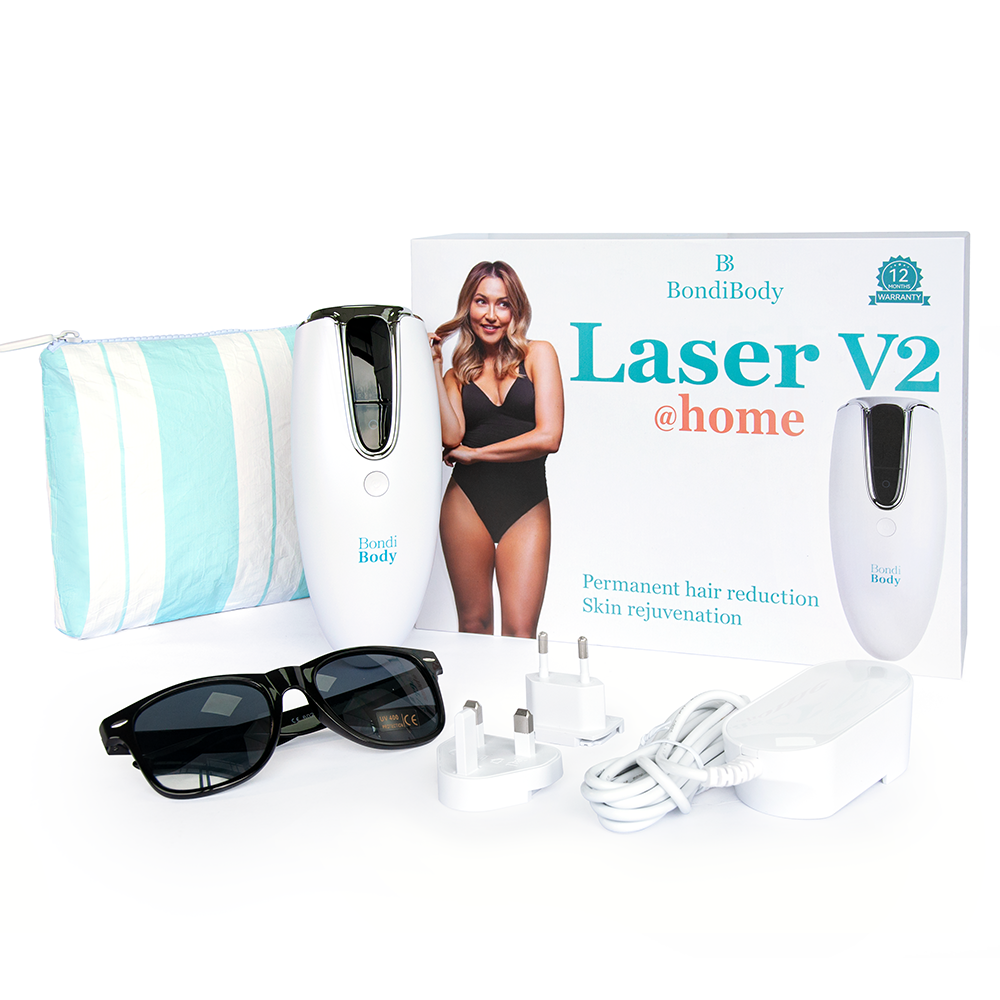
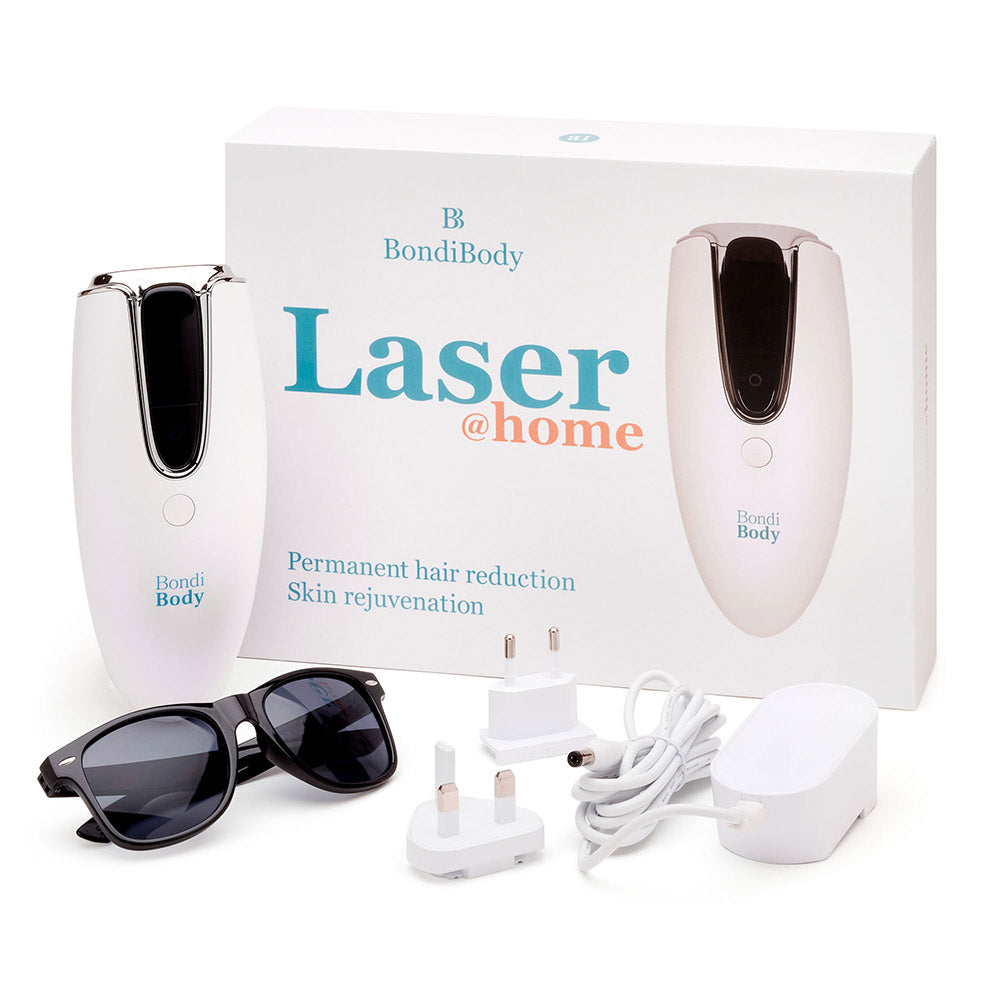
- In the box: IPL skin rejuvenation handset, power supply (including global power plugs), user guide and safety glasses
Rated 4.4 out of 5 from 62 reviews
Free UK delivery on orders over £100. 50-day money-back guarantee. 12-month warranty.
Top rated at home Skin Rejuvenation system
-
Broken Capillary Veins
With consistent weekly use, you can reduce surface level broken capillary veins. supporting a more even-looking complexion.
-

Renews Sun Damaged Skin
Helps reduce the appearance of pigmentation and sun spots, supporting a more even and balanced skin tone.
-
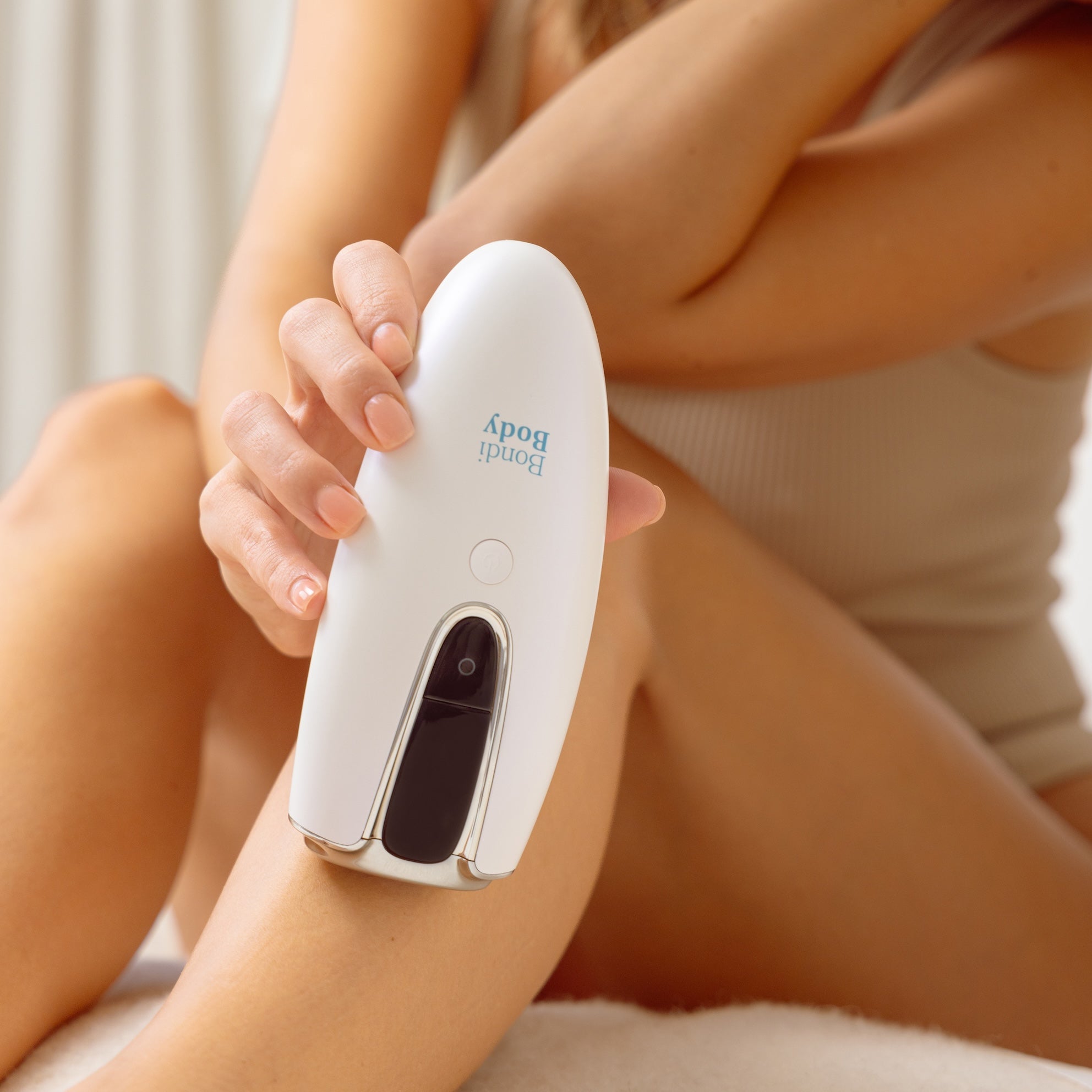
Painless, Zero Recovery Time
Treatment causes no pain to the user and recovery time is zero. 8 intensity settings to choose from.

IPL at Home: How to use Bondi Body V2 Laser @ Home

-
1. Powering On
Plug the device in (it needs to be plugged in to operate). Hold down the white power button for 3-4 seconds to turn the device on.
-
2. Manual & Auto Modes
The device starts in manual mode by default. To switch to automatic mode, hold down the black button (below the display screen) for 3-4 seconds.
-
3. Adjusting Intensity Settings
Quickly press the white power button to change the intensity level. Intensity ranges from 1 (lowest) to 8 (highest).
-
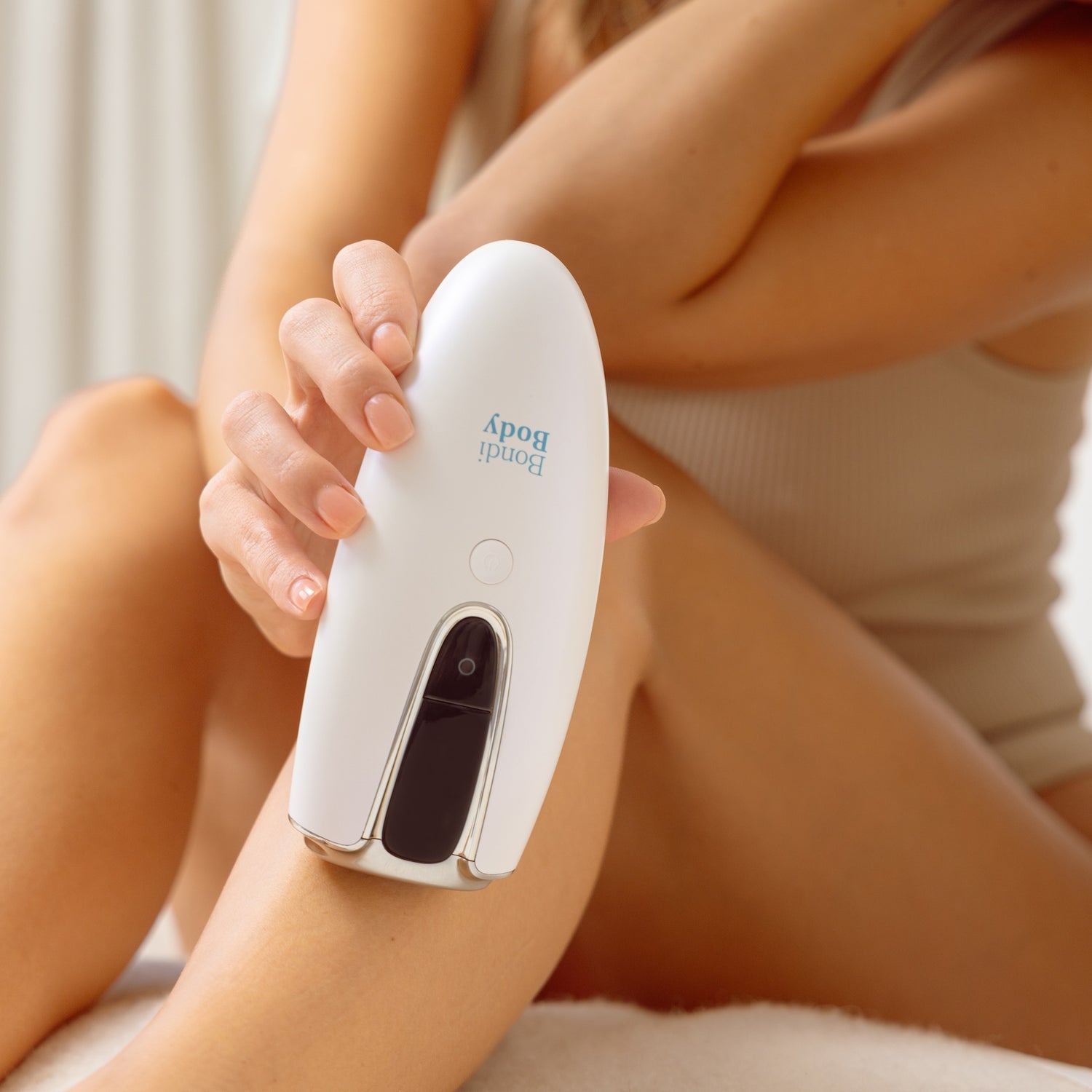
4. Using the Device
Press the IPL output window firmly against the area you want to treat. Move the device in 1 cm increments across the treatment area. It’s okay to let the device double-flash before moving to the next spot.
-
5. Powering Off
To turn the device off, hold the power button down for 3-4 seconds.
-
6. Storage
We recommend storing the device in its original box when not in use.
Which Skin types CANNOT use IPL?
Skin: This IPL device is not recommended for Fitzpatrick Skin Types V and VI. Darker skin tones contain higher levels of melanin, which can absorb excess light energy and increase the risk of burns, hyperpigmentation, or skin damage. Please consult a qualified professional before use if you are unsure of your skin type.
Refer to our Skin Tone chart found here to see whether or not IPL hair reduction is suitable for you.
Usage Directions
Female: Suitable for the entire body except around the eyes.
Male: Suitable for the entire body, including the face and intimate areas, but never on or around the eyes. Using it on the face means a beard may not grow back if you want one in future years.
External use only.
What's in the Box?
The Bondi Body Laser @Home is the strongest at home permanent hair reduction system.
- IPL Skin Rejuvenation Handset
- Power Supply (inc global power plugs)
- User Guide
- Safety Glasses

IPL Skin Rejuvenation FAQs
What Setting Do You Recommend I Should Start On?
Setting 1, this will allow you to see how your skin responds to Laser Skin Rejuvenation. Then increase as you feel comfortable.
Do I Need Eye Protection?
Yes but don’t worry we’ve got you covered. Every box includes a stylish pair of protective glasses.
How Often Can I Use The Device?
Once a week for 12 weeks. Then as you feel you need too.
Can I Use This For Just Skin Rejuvenation?
Yes.
Preparing The Skin Rules
- Skin needs to be clean & dry
- No moisturiser, no fake tan, no deodorant, no perfume, no body oils
Post Treatment Rules
- No hot showers/baths for the next 3 days
- No make up for 12 hours
- No facials for 7 days
- Do not wax, use hair removal cream for 7 days
- Use non-scented moisturiser or non- scented sunscreen
- Do not go into direct sunlight for extended periods.
- Do not lay in the sun or use sun-beds.
- Do not shave within 48 hours
- If you are going outside you please apply sunscreen.
Should I Go Into The Sun After Using The Device?
No. Stay out of the sunlight for lengthy periods.
Why Do You Recommend Using The Device In The Winter Months?
Generally speaking the skin is less likely to be tanned. During the winter you tend to lose your tan, however the the pigmentation / sun spots don’t fade.
This allows the device to identify the problem issues. Using the device during this period reduces the possibility of sun exposure.
Will The Sun Spots Pigmentation Come Back?
Pigmentation and sun spots will return when you go out into the sun.
Why Do You Recommend Using The Device At Night?
Allows for down time post treatment if your skin is red, there is no sunlight at night, and you are less likely to wear make up.
If You Have Been Diagnosed With The Any Of The Following 4 Types Of Rosacea Are You Able To Use The Device?
Before using light therapy to treat any Rosacea we strongly recommend you seek advice from your Dr or Dermatologist.
You Cannot Use Laser / IPL If You Suffer From The Following:
- You are pregnant or breast feeding
- You have any active implants
- You are under the age of 16
- You are taking the following medications:
Your skin is currently being treated or has recently been treated in the past 30 days:
Alpha-Hydroxy Acids (AHAs), Beta-Hydroxy Acids (BHAs), Topical Isotretinoin , Azelaic Acid.
Immunosuppressive medications (Roaccutane) in the past 90 days. - Surgery in the past 90 days to the area to be treated.
- Radiation / Chemotherapy with in the past 12 months.
If you have been diagnosed with the following:
- Diabetes / Metabolic diseases / Epilepsy / Vitiligo
- Congestive heart disease, immunosuppressive disease or suffer from vascular, bleeding disorders.
- Skin cancer, or a history of skin cancer or any other localised cancer in the areas to be treated.
Your skin suffers from or have been exposed to:
- Skin Infections, eczema, burns, inflammation of the hair follicles, lacerations, abrasions, herpes simplex, lesions or hematomas in the areas to be treated.
- Sunburnt, recently tanned or fake tanned skin, tattoos, permanent make up or warts, dark veins, scars & skin anomalies
Still have questions about IPL hair removal?
Reach out to us if there’s something we didn’t cover in our FAQs or if you have any other questions. We’d genuinely love to hear from you!